Comfort back, fast.
Looking for an HVAC contractor Sacramento homeowners can get on the phone the same afternoon? We handle AC repair, heating service, system replacement, water heaters, and indoor air quality across Sacramento and the surrounding county. From a no-cool call in Tahoe Park to a full furnace swap in East Sacramento, the work starts with an on-site look and an honest range before anything gets touched.
Tell us about your hvac contractor job — we'll get you a fast quote.
A firm, all-in price confirmed before we start — no surprises.
On time, done to standard, and tidy when we leave.
Reach a real Sacramento hvac contractor technician to describe the problem — no call-center runaround.
We look at the actual system and explain what is going on before any work.
You get the price for the fix up front and decide before we proceed.
Serving Sacramento and the surrounding area — confirm coverage by phone.
AC quit during a heat spike and they had someone out same afternoon. Clear price before any work, no upsell. Cool again by dinner.
Furnace was short-cycling. The tech actually explained what was wrong instead of just quoting a replacement. Honest and fast.
Got three quotes; these were the only ones who looked at the system before pricing it. Ended up a simple capacitor, not the $6k they scared me with elsewhere.
Scheduled a tune-up, showed up on time, left everything tidy. Will use them for the mini-split install next.
Called at 7am with no heat, had a tech out before lunch. Straightforward pricing and no pressure. Highly recommend.
Replaced our old system and walked us through the options without the hard sell. Clean install, on budget.
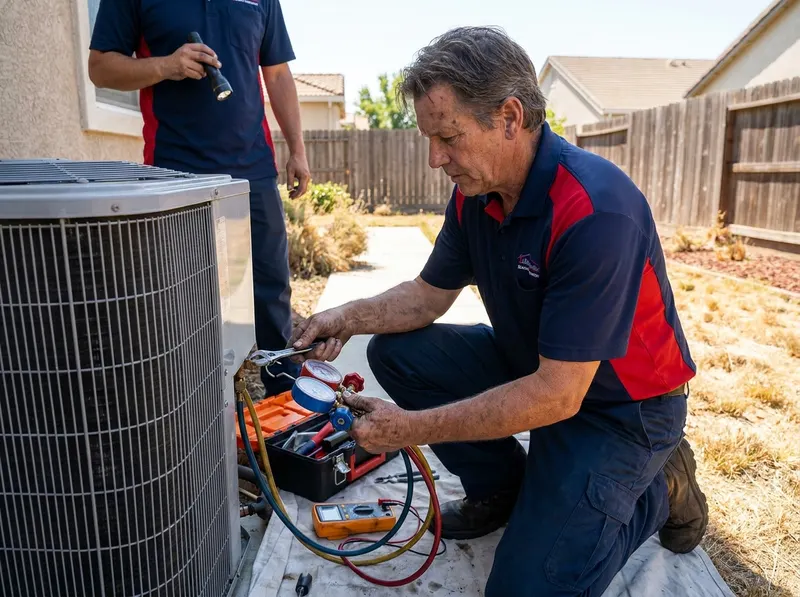
Sacramento summers push condensers hard — a run of 100°F-plus days over Land Park and Pocket-Greenhaven means an AC that struggled in June often fails in July. The most common repairs a technician sees here are failed run capacitors, contactor burnout, low refrigerant from a slow leak, frozen evaporator coils from restricted airflow, and blower motor faults. Diagnosis matters: a system blowing warm can mean an empty refrigerant charge, a seized compressor, or simply a tripped breaker, and each carries a very different cost. A proper diagnostic isolates the true fault so you pay for the fix you actually need.
Repair fits when the system is otherwise sound and the failure is a single, well-defined part. If your unit is under roughly 12 years old and has cooled reliably until now, a capacitor or contactor repair usually makes clear sense. The trade-off shows up on older condensers — a homeowner in East Sacramento or Curtis Park with an R-22 system facing a compressor or coil failure is often better served weighing replacement, since R-22 refrigerant is expensive and the repair can approach a meaningful share of a new system's cost. A technician will lay out both paths honestly rather than pushing the bigger job.
Older neighborhoods bring their own patterns. Homes near McKinley Park and around Elmhurst frequently run aging ductwork and undersized returns, so a coil ices up because airflow is choked — the real fix is a clean filter and clear return, not more refrigerant. In newer Natomas builds, capacitor and control-board faults are more typical. Attic-mounted air handlers common across Sacramento County also run hot in July, which stresses blower motors and wiring. Noting where and how the failure happens — warm air, no start, loud startup, water pooling — helps target the visit.
Every repair starts with the diagnostic and an upfront quote. Refrigerant work is priced by the pound of charge and by whether a leak needs sealing first; a system that leaks out again in weeks was never truly repaired, so finding the leak comes before the recharge. Repairs in College Greens, Tahoe Park, Hollywood Park, and Oak Park follow the same honest process: confirm the fault, confirm the price, then fix it.
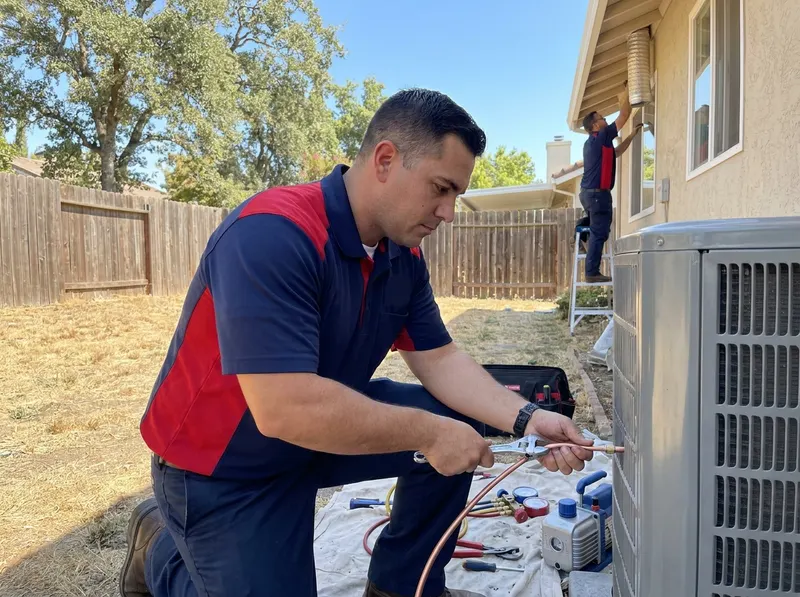
Sizing is the part most Sacramento homeowners get wrong, and it matters more here than in milder climates. A unit that is too large short-cycles and leaves rooms humid; one too small runs nonstop through July afternoons when outdoor temps sit above 100°F. We run a Manual J–style load calculation using your square footage, window exposure, insulation, and duct layout rather than guessing by the old unit's tonnage. Older homes in Land Park and Curtis Park often have original ductwork that leaks in the crawlspace or attic, and installing a new condenser onto leaky ducts wastes the efficiency you paid for — we inspect the duct system as part of the quote.
Central AC installation fits most Sacramento homes with existing ductwork, from the ranch-style properties near College Greens to two-story builds in Natomas. If your ducts are sound and you already have a furnace, a straight condenser-and-coil replacement is the cleanest path. A heat pump is worth considering if you want combined heating and cooling on one system, which suits smaller Elmhurst or Tahoe Park bungalows where gas furnace space is tight. The trade-off: heat pumps carry a higher upfront cost but lower running cost during Sacramento's mild shoulder seasons, while a standard AC-plus-furnace setup is cheaper to install and familiar to service.
Attic and equipment access shapes the day. Homes in East Sacramento and Oak Park with narrow side yards or older electrical panels sometimes need a panel or disconnect update before a new condenser can be energized safely — we flag that during the on-site visit rather than mid-install. Pocket-Greenhaven and Hollywood Park properties with backyard setbacks near fences give us room to place the condenser for good airflow and quieter operation, which extends the compressor's life through repeated Valley heat cycles.
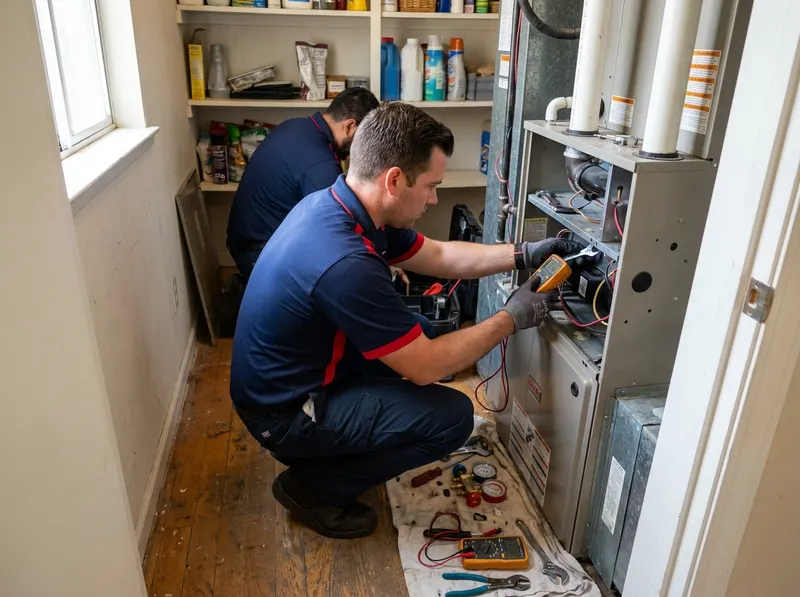
Repair fits when a specific part has failed and the rest of the furnace is sound. A furnace in a 1920s Curtis Park bungalow or a mid-century Tahoe Park ranch can run reliably for years after a single igniter or flame-sensor swap, so replacing the whole system for one bad component wastes money. The decision leans toward replacement when the unit is past roughly 15 years, needs a heat exchanger, and has already had repeated repairs in the same season. A furnace that short-cycles or throws a limit fault sometimes points to airflow, not the burner, which is why the technician checks the filter and blower before condemning a part.
Sacramento's older housing stock shapes what we find. Homes in Land Park and East Sacramento often have furnaces tucked in tight hall closets or basements where dust and delta grit clog the flame sensor and choke intake air. In Natomas and Pocket-Greenhaven, newer builds tend toward package units and heat pumps that fail differently, with defrost-board and reversing-valve issues rather than pilot problems. Homes near the American River Parkway and low-lying Elmhurst blocks pick up more moisture, which corrodes gas-valve terminals and sensors faster than in drier neighborhoods.
Most no-heat calls in this region trace back to a handful of parts. A dirty flame sensor is the single most common cause of a furnace that lights and then shuts off after a few seconds. Failed hot-surface igniters, weak run capacitors on the blower, and tripped high-limit switches from a clogged filter round out the frequent list. When the fault is a cracked heat exchanger or a rusted-through burner assembly, we say so plainly, because that is a safety issue and repair is usually not the right call.
Booking is straightforward across Oak Park, Hollywood Park, College Greens, and the surrounding Sacramento County areas. Give the symptom on the phone, whether that's no ignition, cold air from the vents, or a system that trips the breaker, and the technician can bring likely parts. Repairs on common components are frequently finished in one visit; a control board or blower motor may need a return trip if the part isn't stocked.
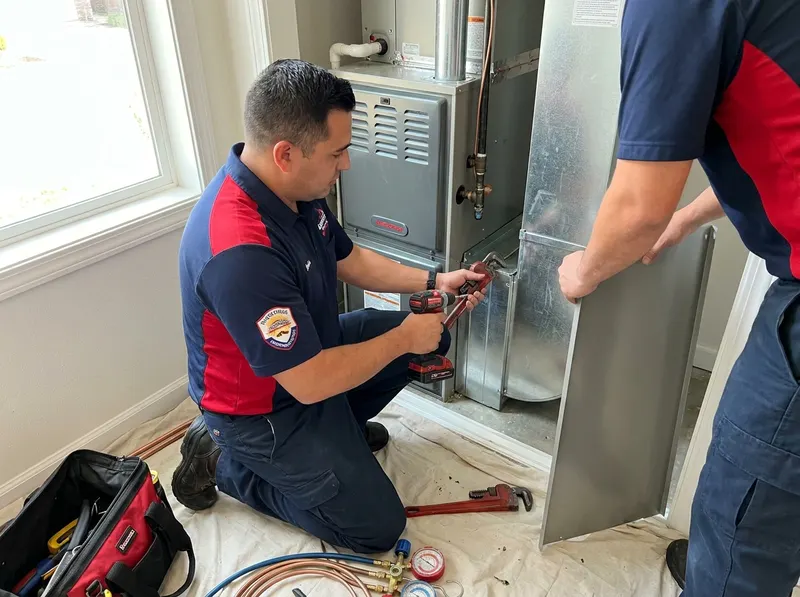
The right heating choice in Sacramento depends on the home and how the winter feels inside it. A high-efficiency gas furnace is the common pick for older homes in Land Park and Curtis Park, where existing gas lines and ductwork are already in place and mild-but-damp December mornings call for quick, strong heat. A heat pump makes more sense for homeowners in Natomas or newer Pocket-Greenhaven builds who want one system that handles both heating and cooling and who are moving away from gas — Sacramento's mild lows rarely dip low enough to hurt heat-pump performance. The trade-off is real: heat pumps cost more up front and lean on electricity rates, while gas furnaces have lower equipment cost but a separate summer AC.
Sizing is where most installations go wrong. An oversized furnace short-cycles, wears its igniter, and leaves rooms uneven; an undersized one runs constantly. We run a load calculation on the actual house — the leaky single-pane windows common in East Sacramento bungalows and the tight, well-sealed builds in College Greens produce very different heating loads even at the same square footage. That number, not the old unit's rating, drives the equipment we recommend.
Ductwork and venting matter as much as the box itself. Many homes in Oak Park and Tahoe Park have original ducting in crawlspaces or attics that leaks conditioned air before it reaches the room. During a new furnace install we inspect that ductwork, seal accessible joints, and confirm the flue or condensate path is code-correct. Skipping this step means paying to heat air that never arrives.
Every heating installation in Sacramento County requires a permit, and gas and electrical work must pass inspection. We pull the permit, schedule the inspection, and stay for it. Homeowners in Elmhurst and Hollywood Park replacing a decades-old furnace should also expect us to verify carbon-monoxide safety and combustion-air clearances, since older mechanical closets were often built to earlier standards.
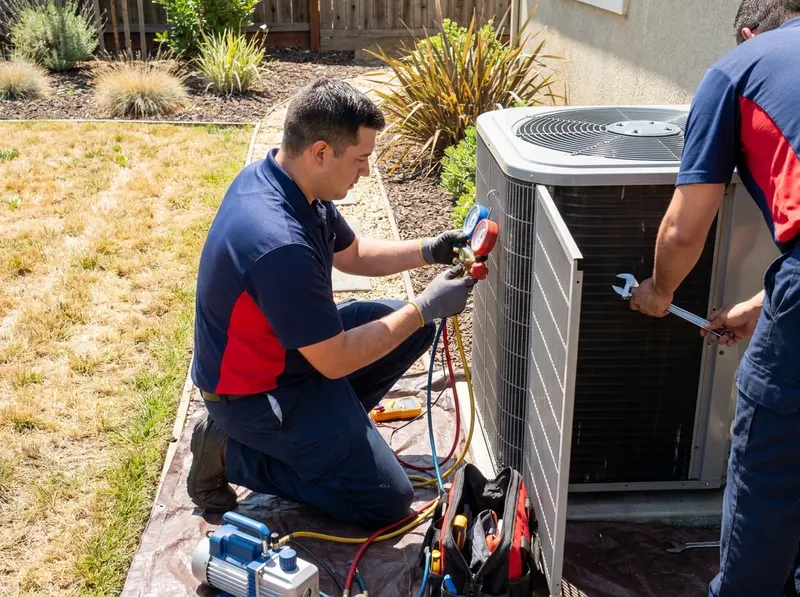
A heat pump makes the most sense in Sacramento because the climate rarely demands deep-cold heating. Winters here sit mostly in the 40s and 50s, which is the range where an air-source heat pump runs at its highest efficiency. Homes in Natomas and Pocket-Greenhaven that were built with electric or heat-pump-ready panels are especially good candidates, since no gas line rework is needed. For an older East Sacramento or Elmhurst house still running a gas furnace, a heat pump can replace both the furnace and the aging AC condenser in one project, cutting the equipment count in half.
The main decision is heat pump versus keeping a gas furnace with a standard AC. A gas furnace produces stronger, faster heat on the rare frosty Sacramento morning, and it can be cheaper up front if the existing AC still has life left. A heat pump wins on year-round efficiency, all-electric operation, and one system to maintain instead of two. In two-story homes near McKinley Park or Tahoe Park, a variable-speed heat pump also holds temperature more evenly between floors than a single-stage furnace-and-AC setup. The trade-off is that supplemental electric heat strips draw more power on the coldest days, so proper sizing to the home's actual load matters more than chasing the largest unit.
Sizing is done on-site, not from a phone call. Square footage, insulation, window exposure, and ductwork all change the tonnage a home needs, and the shaded lots common in Curtis Park behave differently from the sun-exposed newer builds in Natomas. Oversized equipment short-cycles and wears faster; undersized equipment runs constantly in a July Sacramento heat wave. During the visit the ductwork is inspected too, since a heat pump moves a larger volume of air at lower temperatures than a gas furnace and undersized returns in an older Hollywood Park or College Greens home can choke performance.
For homes already on the fence between repair and replacement, a heat pump is often the cleaner path when the AC condenser is at end of life anyway. Replacing a dead condenser and an old furnace separately can cost close to a single matched heat pump system that then covers both jobs. Every install includes a full startup check, refrigerant charge verification, and a walkthrough of thermostat operation before the crew leaves.
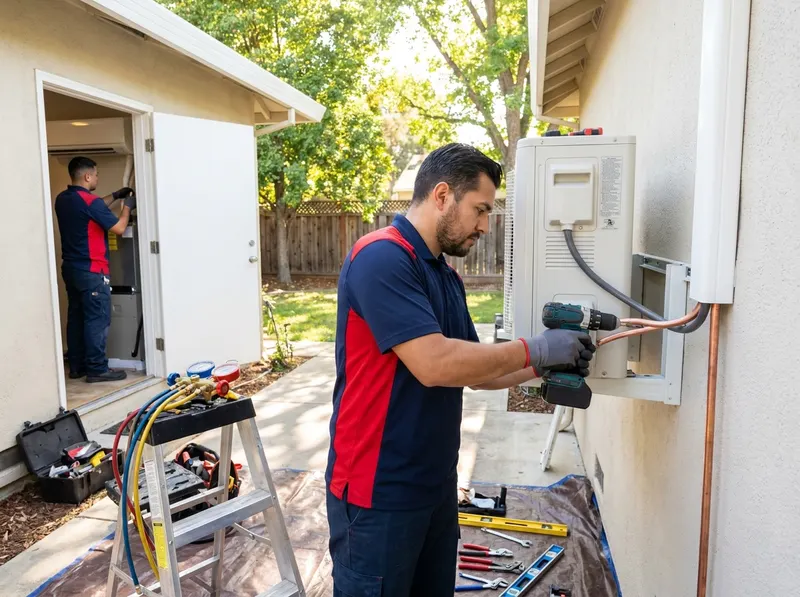
Ductless mini-splits fit best when adding ducts would mean tearing into finished walls or a tight attic. Many pre-1950s bungalows in Land Park and Curtis Park were built without central air, and a mini-split adds cooling without disturbing plaster walls or original trim. The same logic applies to converted garages and back-house ADUs common in Oak Park and Tahoe Park, where a single wall-mounted head can condition the whole space off one outdoor unit.
The main alternative is extending an existing central system or installing new ducted equipment. Central air makes sense when a home already has usable ductwork and needs whole-house comfort from one thermostat. A mini-split makes sense when you want independent temperature control by room, are conditioning an addition, or want to avoid duct losses. The trade-off: mini-splits cost more per zone up front and put a visible indoor head on the wall, but they run efficiently and let you cool only the rooms in use. For a two-story East Sacramento home where the upstairs bakes in July, a mini-split in the hottest bedroom is often cheaper than reworking the entire duct system.
Sacramento's climate favors heat-pump mini-splits. Summer highs in Natomas and Pocket-Greenhaven regularly push past 100 degrees, so proper sizing and condenser placement matter — an oversized unit short-cycles and cools unevenly. Mild winters mean the same equipment covers heating without a separate furnace in most cases. On the install itself, head placement and line-set routing are planned during the on-site visit, since exterior wall access and condenser location vary by house across neighborhoods like Elmhurst, Hollywood Park, and College Greens.
Every quote follows a free on-site assessment. Ranges here are ballparks; the exact price is confirmed in writing after we see the space, measure the load, and confirm the number of zones. Call (279) 260-0399 to schedule.
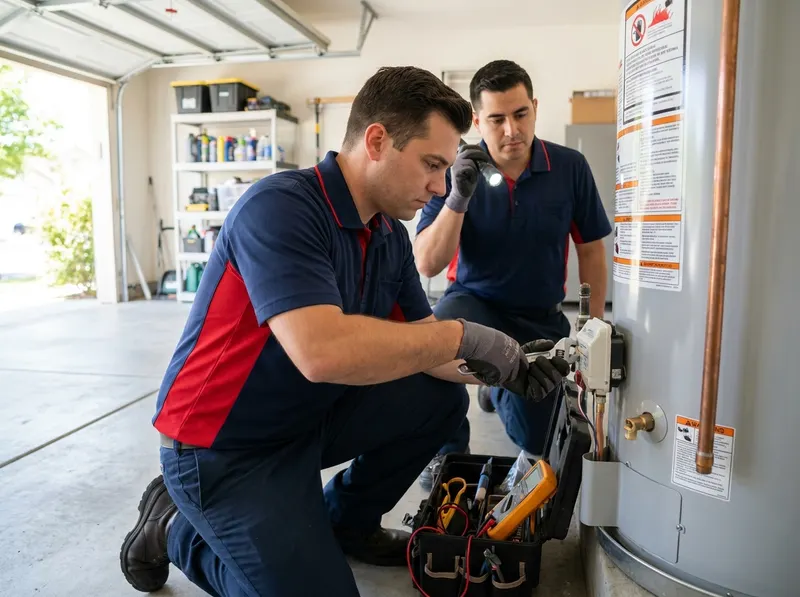
Repair fits when the tank itself is sound and the failure is a serviceable part. A pilot that won't stay lit, a failed heating element, a stuck thermostat, or a leaking drain valve are usually worth fixing on a unit under about eight years old. Replacement is the better call once the tank is rusting through, the anode rod is long gone, or repair costs are climbing toward half the price of a new unit. A tank leaking from the body — not a fitting — cannot be repaired and needs to come out. Sacramento's hard water shortens tank life across neighborhoods like Curtis Park and Tahoe Park, so sediment buildup and premature failure are common here, especially on units that were never flushed.
The tank-versus-tankless choice comes up on most replacements. A standard tank is cheaper to install and simpler to service, which suits many East Sacramento and Oak Park homes with existing gas lines and a dedicated closet or garage space. Tankless units save space and cut standby heat loss, but they cost more up front and may need gas line, venting, or electrical upgrades to meet code. In older Elmhurst and Hollywood Park houses, that upgrade work is often the deciding factor. We walk through both options on the estimate so the trade-off is clear before you commit.
Location matters for the install. Garage-mounted units in Pocket-Greenhaven and College Greens often need seismic strapping and proper platform height per code, and attic or interior-closet units require a working drain pan and overflow line. Homes near the American River Parkway and low-lying pockets of Natomas benefit from a leak sensor or pan alarm, since a slow tank leak can go unnoticed for weeks. We confirm venting clearance and combustion air on gas units so the replacement passes inspection the first time.
Regular service extends the life of a working unit. An annual flush clears sediment, an anode rod check catches corrosion early, and a temperature and pressure valve test confirms the safety relief still functions. On Sacramento's mineral-heavy supply, a yearly flush is the single best habit for keeping a tank running past the ten-year mark.
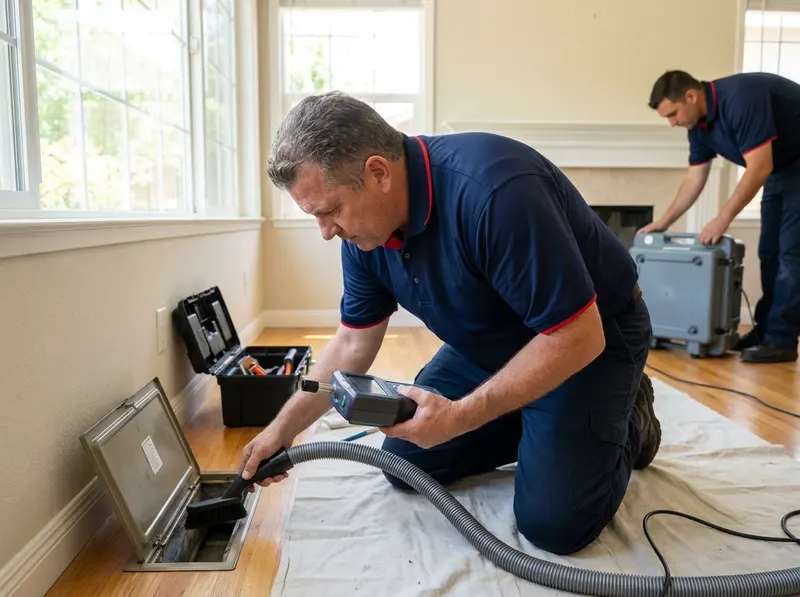
Sacramento homes face two seasonal air problems that make indoor air quality upgrades worth considering. Summer wildfire smoke drifting into the Valley forces windows shut for weeks, so whatever your HVAC filter misses stays recirculating inside. Spring brings heavy tree and grass pollen across neighborhoods near the American River Parkway and William Land Park, where mature landscaping is dense. A higher-MERV media filter or a whole-home air purifier tied into your existing furnace or air handler addresses both without running a noisy portable unit in every room.
Deciding between options comes down to your goals and your ductwork. A media filter cabinet is the practical first step for most homes — it captures far more fine particulate than a one-inch throwaway filter and only needs changing a few times a year. If allergies, asthma, or smoke sensitivity are the concern, a whole-home purifier or a polarized filtration system removes smaller particles that standard filters pass through. UV lights installed at the coil are aimed at mold and biological growth on the evaporator, which matters in older East Sacramento and Curtis Park homes with original ductwork. The trade-off is cost and airflow: aggressive filtration can restrict airflow on undersized or aging blowers, so we check static pressure before recommending anything that could strain your system.
Humidity is the other half of the picture. Sacramento's dry summers pull moisture out of the air, and homes in Natomas and Pocket-Greenhaven often feel it as static, cracked woodwork, and dry sinuses. A whole-home humidifier tied into the HVAC system holds a comfortable range without room units. In tighter, newer builds, an energy recovery ventilator brings in filtered fresh air while retaining conditioned air — useful when smoke season means you can't just open a window in Tahoe Park or College Greens.
We start every indoor air quality job with a free on-site visit. Duct layout, blower capacity, and the age of your equipment all change what makes sense, so a quote sight-unseen would be a guess. A home in Land Park with original 1940s ducts needs a different approach than a recent Natomas build with a sealed envelope. After the walkthrough you get a written recommendation and a confirmed price before any work begins.
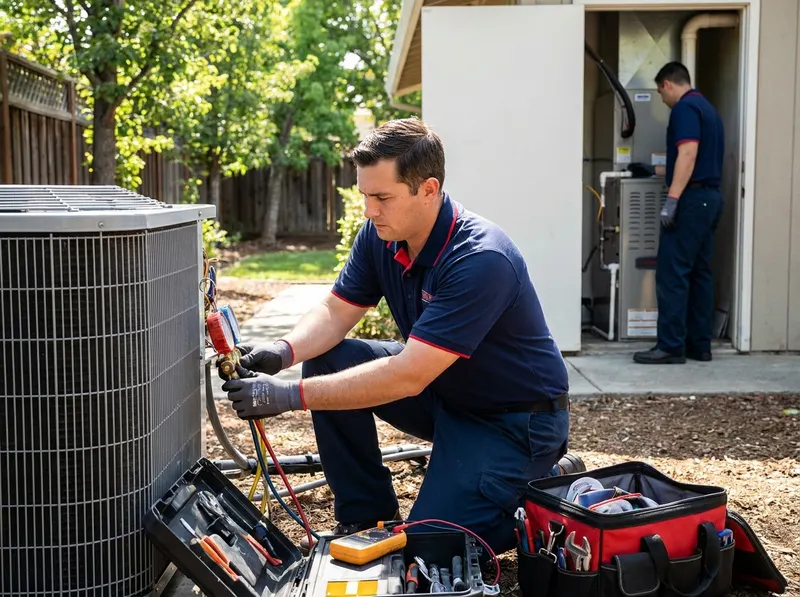
The best time to book a tune-up in Sacramento is spring for cooling and fall for heating. Central AC systems here work hard from June through September, when afternoon highs sit in the 90s and 100s across the valley, and a system that limps into that stretch with a dirty coil or low refrigerant tends to fail during the first real heat wave. A spring visit finds those weak points while the weather is still mild and technicians are not stacked with emergency no-cool calls. Fall furnace checks matter for the same reason in reverse, catching cracked igniters and clogged burners before the first cold morning.
Maintenance fits homes where the system still runs but hasn't been serviced in a year or more, and it fits older equipment common in East Sacramento, Land Park, and Curtis Park where furnaces and condensers often outlive their original installers. If a system is short-cycling, blowing warm air, or tripping the breaker, that is a repair call, not a tune-up; the honest trade-off is that a tune-up will diagnose those issues but the fix is billed separately. For a system under five years old, an annual tune-up is mostly about protecting the manufacturer warranty, which frequently requires documented professional maintenance.
Local conditions shape what a Sacramento tune-up actually finds. Homes near the American River Parkway and in Pocket-Greenhaven pull in fine dust and pollen that loads up filters and evaporator coils faster than average. Natomas homes built on the flats often run larger single-stage systems that benefit from airflow and static-pressure checks. Attic-mounted furnaces in Oak Park, Tahoe Park, Elmhurst, Hollywood Park, and College Greens bungalows collect dust and rodent debris, so the visit includes clearing the cabinet and confirming the flue draws properly. These are the details that separate a real inspection from a filter swap.
A maintenance plan makes sense if you want both the spring and fall visits handled without calling twice. If you prefer to book as needed, a single seasonal visit still delivers the core benefit: a clean, checked, calibrated system heading into the season it works hardest.
If your air conditioner is under 10 years old and the repair is a capacitor, contactor, or refrigerant issue, a repair is the sensible call and usually runs a few hundred dollars. If the system is 15-plus years old, uses discontinued R-22 refrigerant, and needs a compressor, replacement makes more financial sense because you stop pouring money into failing parts. The trade-off is upfront cost versus reliability: a repair is cheap today but risky through a July heat wave, while a new high-efficiency system costs more now and lowers your SMUD summer bills. If you want the lowest install price, a straight-cool AC and gas furnace pairing fits most Sacramento homes; if you want the lowest operating cost and a single system for both seasons, a heat pump fits better — the trade-off is higher equipment cost against long-term efficiency in our mild winters. For older homes in Land Park and Curtis Park with tight attic access, a ducted replacement keeps things simple, while a ductless mini-split fits added rooms and converted garages where running new duct is impractical.
| On-site diagnostic / minimum call | from $150 |
| AC or furnace repair (common parts) | $150–$650 |
| Refrigerant recharge / leak repair | $250–$900 |
| Seasonal tune-up (AC or heating) | $150–$225 |
| Water heater replacement (tank) | $1,400–$2,800 |
| Tankless water heater install | $3,000–$6,000 |
| Central AC system replacement | $6,500–$12,000 |
| Furnace replacement | $4,000–$8,500 |
| Heat pump system install | $8,000–$16,000 |
Call for a firm, all-in price before any work begins.
We give an upfront, written price before any work begins — you approve it first. No surprises.
Our work is done to standard and we stand behind it — a real fix, not a quick patch.
We’ll give you an honest assessment. If you don’t need the work, we’ll tell you.
Sacramento's summer is a genuine equipment stress test — consecutive 100°F stretches near the American River Parkway push undersized and aging AC systems past what they were sized for, which is why replacement calls spike during the first big heat wave each June. Older homes around William Land Park, Curtis Park, and East Sacramento often carry original ductwork and knob-and-tube-era layouts that need real evaluation, not a same-size swap. Wildfire smoke that settles over the valley in late summer also drives steady indoor air-quality work, since homes near Oak Park and Tahoe Park run their systems harder just to keep filtered air moving.